MES for medical devicesand diagnostics.
Trace each device back to its components, steps and inspections. POMSnet Aquila builds the electronic device history record as the work happens.
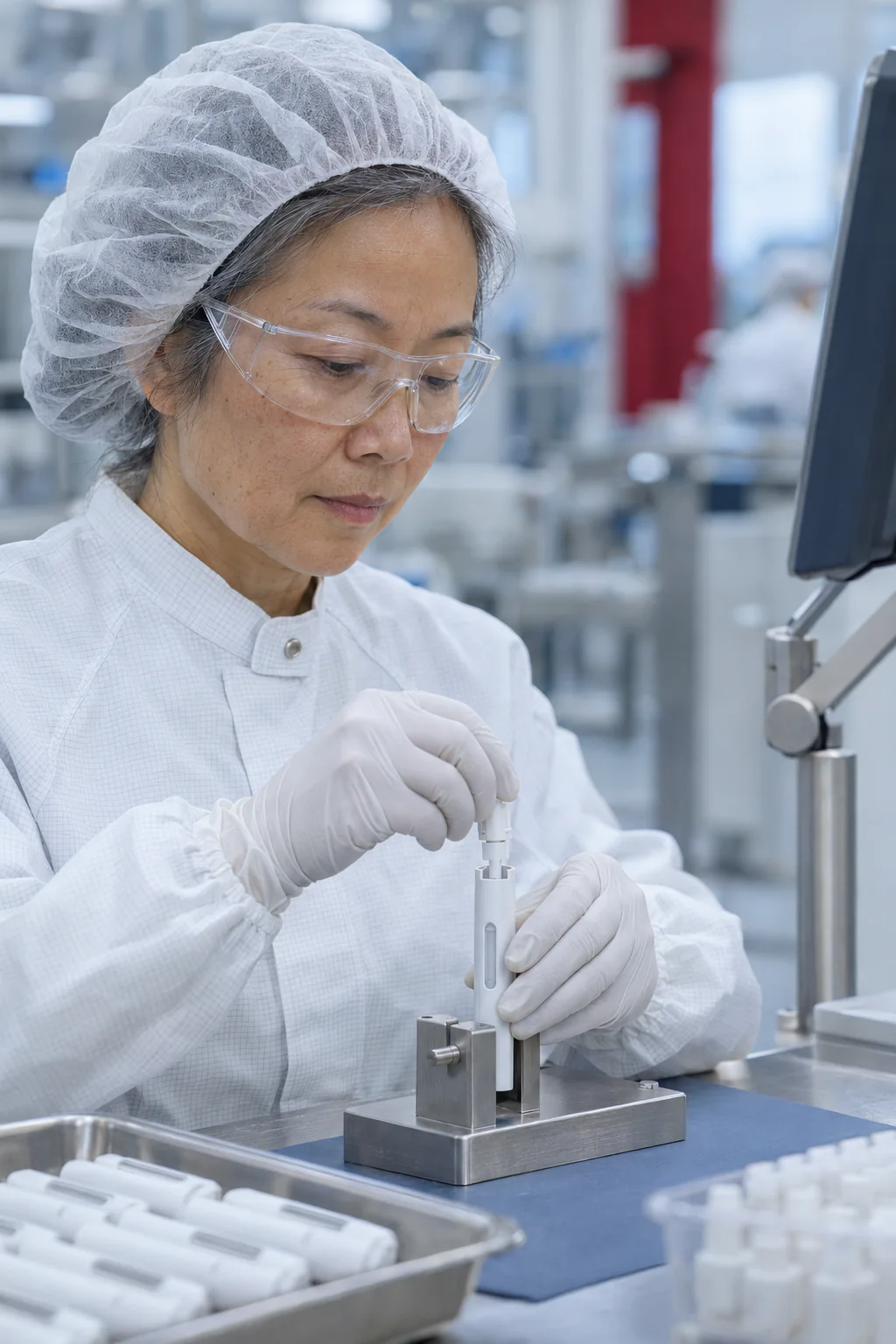 Instructions, pictures and limitsGuided assembly
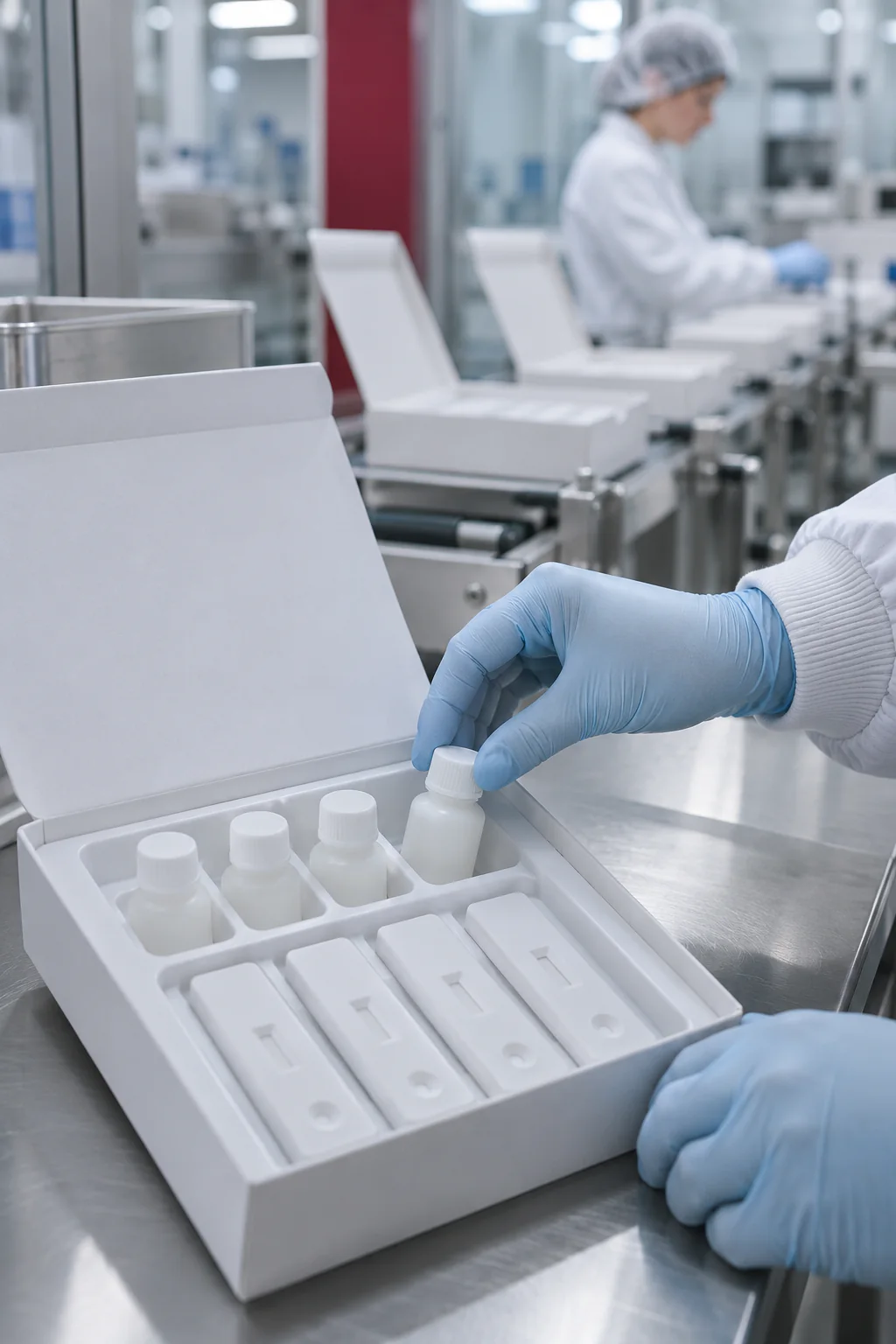 Reagents, cartridges and kitsDiagnostics
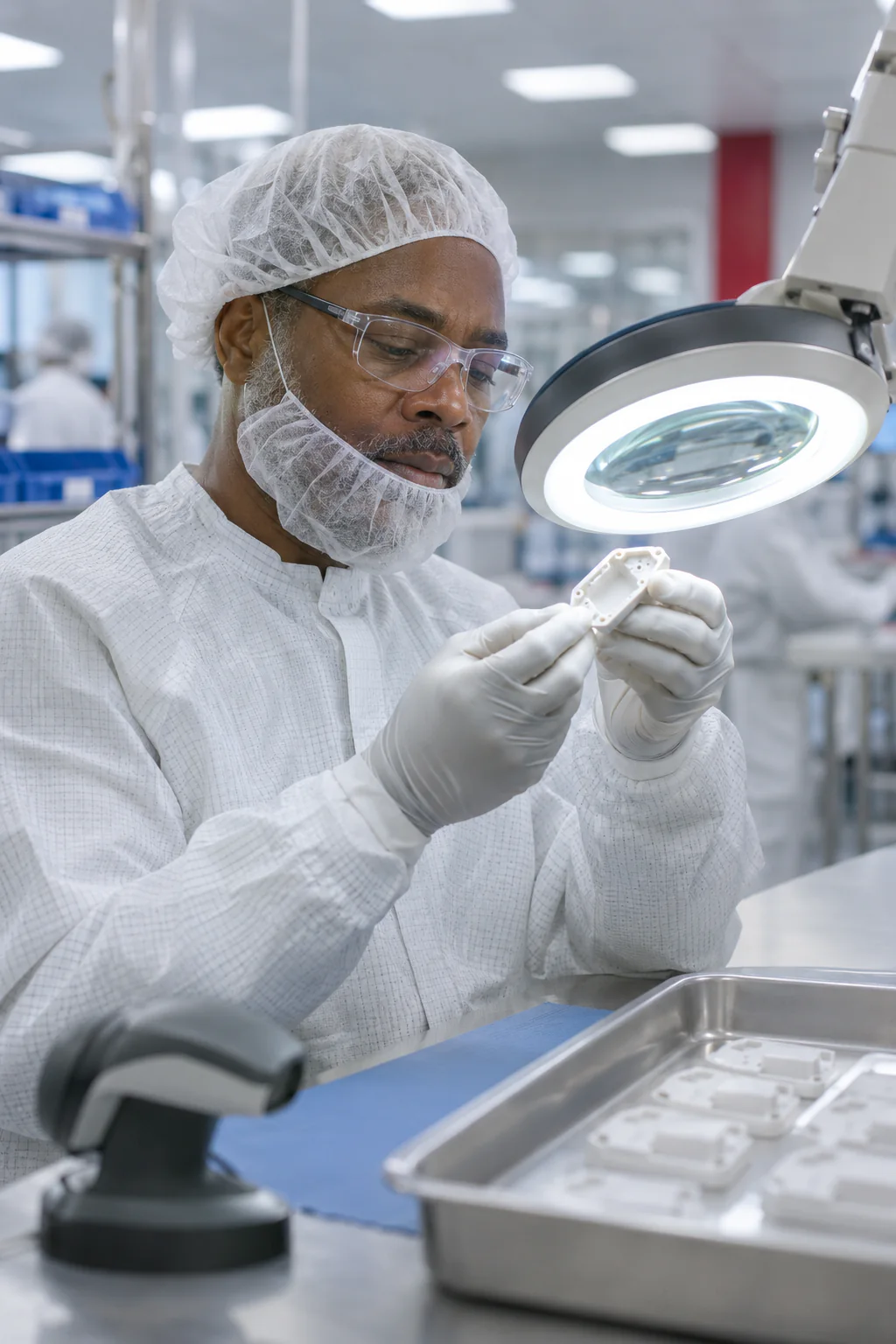 Decisions made at the stepInspection and labelling
What POMS MESchanges.
Paper travellers, hand-copied lot numbers and separate inspection sheets leave the device history record to be pieced together after the work.
- 01
Hand-copied lot numbers becomes
Component traceability
Which lots went into which devices, forward and back.
- 02
Binder instructions becomes
Guided assembly
Clear instructions at the bench, with pictures and limits.
- 03
Separate inspection sheets becomes
Inspection records
Results and acceptance decisions captured at the step.
- 04
Chasing paper travellers becomes
Faster release
A complete DHR, with nothing left to chase.
The eDHR buildsas the work happens.
Each step is recorded against the approved instruction, so the device history record is complete when the work is.
Step 01 of 06
Scan component lots
Scan the housing, dose mechanism and cartridge holder before you start.
- HousingScan or enter
- Dose mechanismScan or enter
- Cartridge holderScan or enter
Device history record
SN 26-1187-0042 · Pen injector · Started 09:38
- Scan component lotsIn progress
- Assemble mechanismPending
- Fit checkPending
- Dose checkPending
- Visual inspectionPending
- Label and verifyPending

Batch and discretein one platform.
Reagent and buffer preparation run as batches, alongside filling, assembly and kitting. Aquila keeps the reagent lot and the finished kit in connected records.
Conceptual view
Buffer prep
Reagent prep
Cartridge fill
Kitting
Fujirebio Diagnostics,from paper to POMS MES.
Fujirebio Diagnostics chose POMS for its diagnostic products and the manufacturing it carries out for partners.
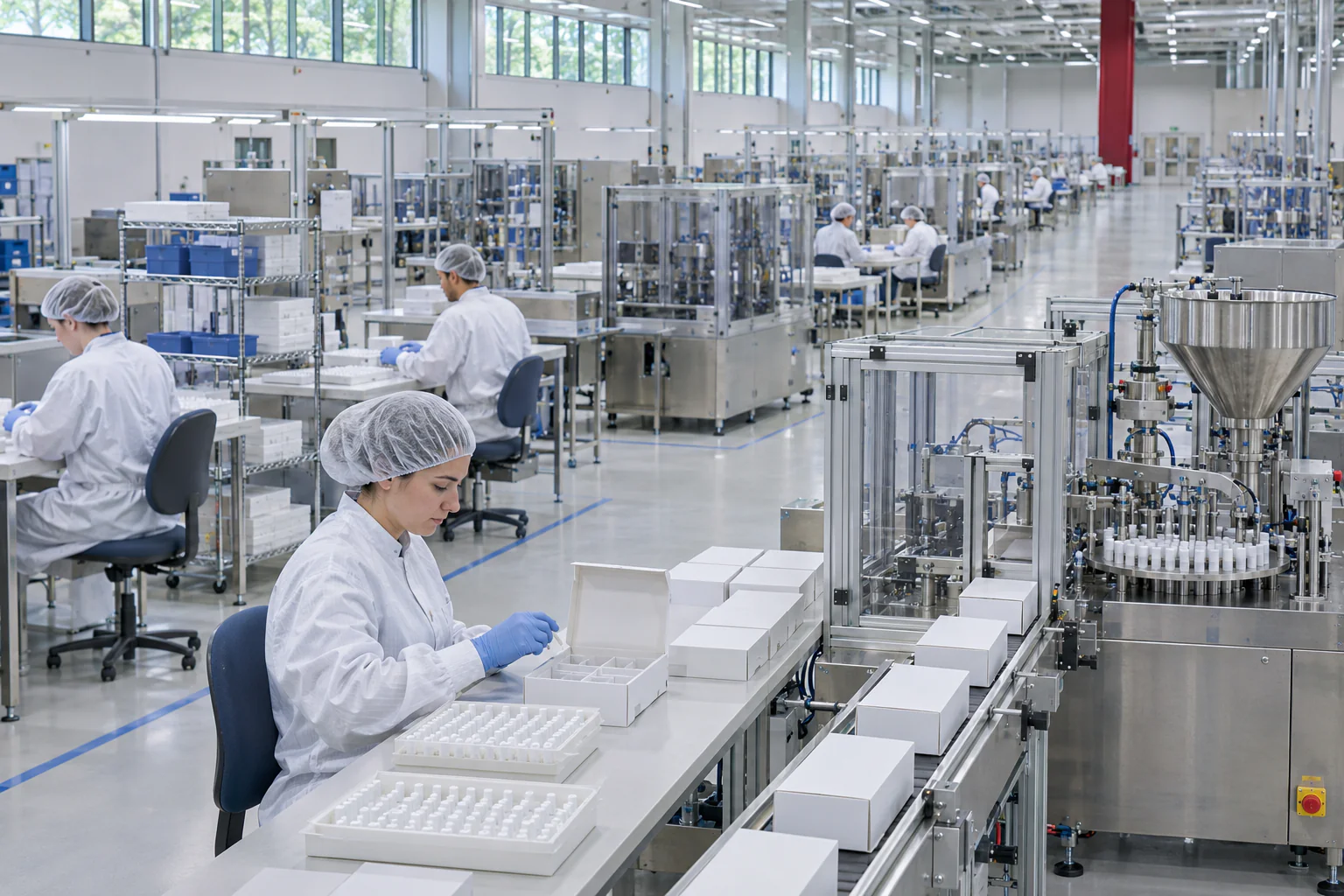

“By moving from paper to Aquila MES, we significantly reduced manual errors and shortened our review cycles. Review by Exception helped our quality teams focus on what truly matters, while giving manufacturing greater confidence in the data captured at the point of execution.”
- Reduction in manual errors
- 25–30%
- Departments running MES
- 13
- Phased rollout began
- 2018
Where to start.
Bring three things to the demo. Together they show where people record by hand today, and where a connection to another system would help.
- 01
An assembly instruction
The steps, pictures and limits your operators follow.
- 02
An example inspection
The results and acceptance decisions you record.
- 03
The identifiers your site uses
Part, lot and serial numbers, and where they come from.



Questions device and diagnostics teams ask
Does POMSnet Aquila produce an electronic device history record?
Yes. Aquila records each assembly step, component lot, inspection, label and person as the work happens, building the eDHR for each device, lot or batch.
Does Aquila support diagnostics manufacturing?
Yes. Fujirebio Diagnostics uses POMSnet Aquila for its diagnostic products and the manufacturing it carries out for partners, with MES running in 13 departments.
Can Aquila handle both batch and discrete production?
Yes. The same product runs batch processes, such as reagent preparation, and discrete assembly and inspection. The reagent lot and the finished kit sit in connected records.
How does POMS MES help us release faster?
Aquila checks each entry against its limits as the work happens and flags exceptions, so quality reviews those instead of every page. Fujirebio saw a significant decrease in review cycle times with review by exception.

See an eDHR builtstep by step.
We will walk through an assembly and an inspection like yours.